
The Partisans’ Fracturing Authority
Doctor ZhivagoThis flow traces the Forest Brotherhood’s internal tensions as ideology and military discipline collide with fear and civilian needs.
increasing Bearing strength in each event
 decreasing
Bearing strength in each eventdecreasingLiberius Takes Command
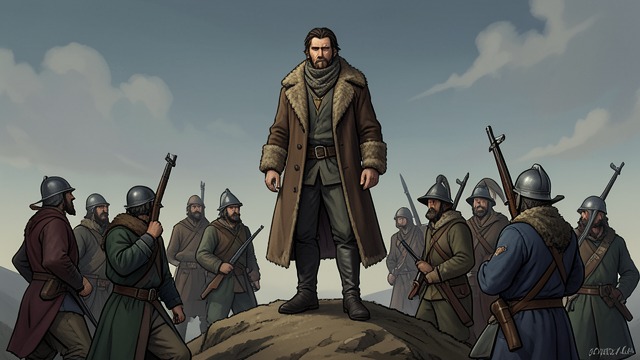
Liberius Takes Command
A revolutionary commander
Liberius Averkievich Mikulitsyn builds influence among armed groups in the Urals.
His father, Averkii Stepanovich Mikulitsyn, remains politically distinct but is not his military enemy.
The family divide reflects the unsettled loyalties of the region.
A Rival’s Challenge
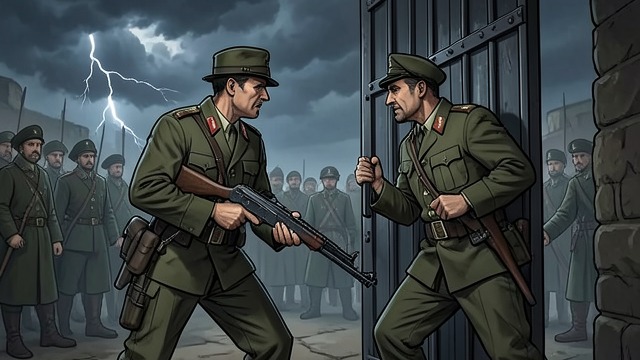
A Rival’s Challenge
Power contested
Vdovichenko’s influence unsettles Liberius and draws support from disaffected men.
The leadership struggle turns political disagreement into a threat to camp unity.
Zhivago sees the danger in authority defended as revolutionary necessity.
A Plot in the Clearing
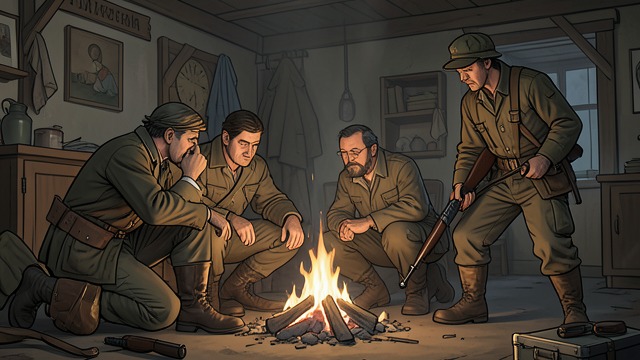
A Plot in the Clearing
Betrayal intercepted
A group of partisans conspires to hand Liberius over to White forces or kill him.
Zhivago overhears the plan and tries to warn the camp.
The plot fails, but Sivobluy’s role as informer deepens mistrust.
The Executions
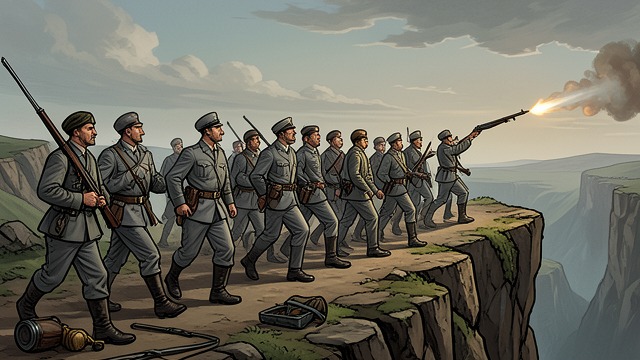
The Executions
Discipline turns punitive
After a failed conspiracy and a separate brewing case, condemned men are marched to a precipice.
Rzhanitsky’s gunfire triggers panic, but the guards shoot the prisoners anyway.
The executions expose the violence beneath the camp’s claims of collective liberation.
The Refugees Break Through
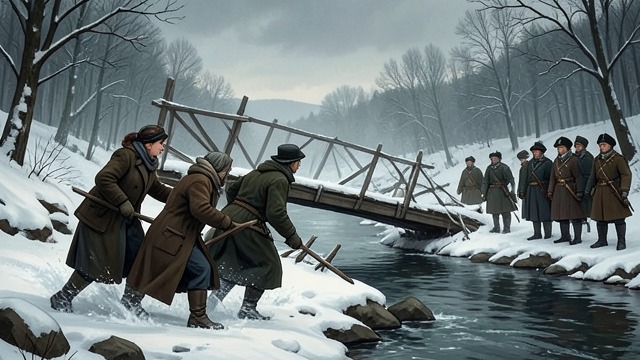
The Refugees Break Through
Civilian needs resist command
Women fleeing White reprisals cut paths and bridges through the taiga despite orders to divert them.
Their resourcefulness frustrates Liberius’s plan, but their presence reveals the camp’s dependence on civilian courage.
Military control proves unable to master the crisis it helped create.
before Zhivago’s capture
during the partisan winter
before the families arrive
a cold morning in the taiga
as winter closes in
